Era
Art Nouveau (1890–1915)
The Art Nouveau movement, deeply influenced by Japonisme - the minimalist and sophisticated representation of nature, celebrated the decorative arts while standing in stark contrast to the overly intricate style of the Victorian era. Recognisable by its vibrant hues, organic motifs, and sinuous lines, Art Nouveau jewellery typically utilised materials that facilitated this fluid aesthetic - such as opal, moonstone, ivory, enamel, and glass. During this period, the 'cult of the female figure' emerged, inspired by the talented and charismatic actresses and opera singers of the era. This symbolised a further departure from Victorian norms, as the nude female form became a prevalent motif of the Art Nouveau period. Art Nouveau was not only a significant shift aesthetically but also reflected changing societal attitudes towards nature and femininity. Artists like René Lalique and Louis Comfort Tiffany, pivotal figures of the Art Nouveau movement, masterfully incorporated the era's defining characteristics into their work, contributing to its profound impact on the world of decorative arts. Moreover, Art Nouveau was a part of a broader reaction to the industrialisation of Europe. The emphasis on handcraftsmanship and the integration of form and function reflected a desire to return to unique, beautifully crafted items. The dragonfly was another recurring motif in this period, symbolising change and transformation - a clear reflection of the shifting zeitgeist of the time.
Filters
4 pieces
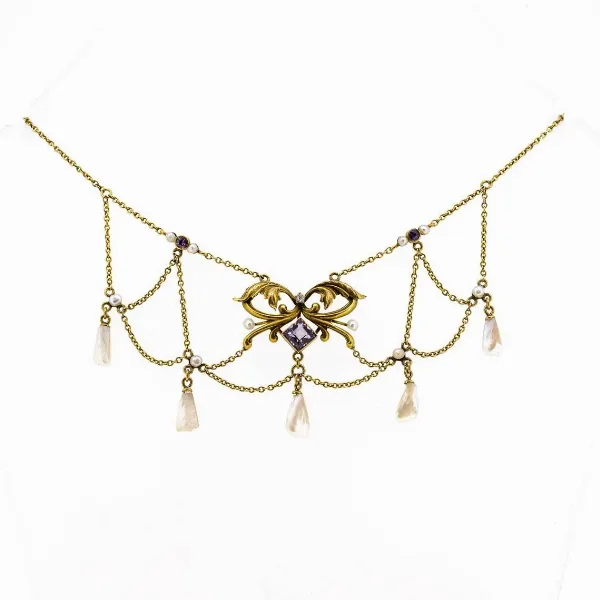
Art Nouveau Natural Pearl Amethyst & Diamond Necklace
Art Nouveau (1890–1915) · £1,295.00
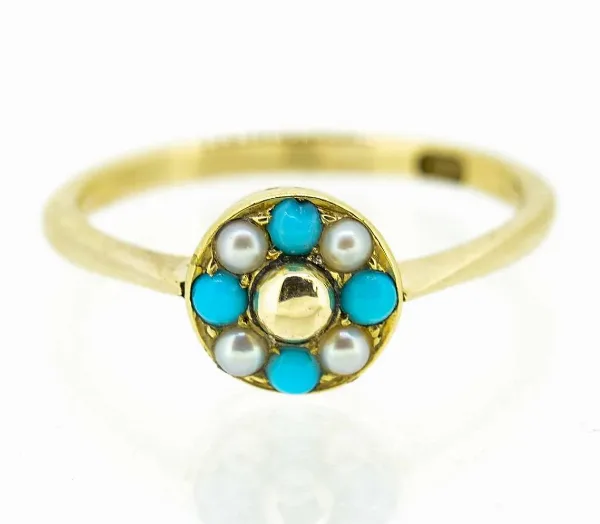
Early 20th Century 9ct Yellow Gold Pearl and Turquoise Cluster Ring
Art Nouveau (1890–1915) · £195.00
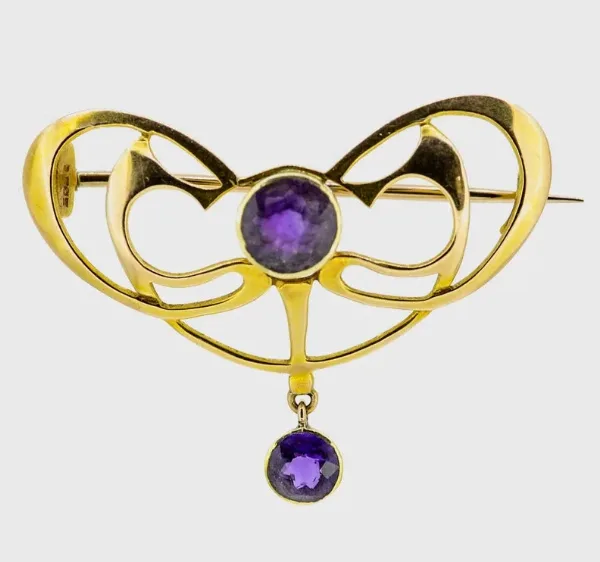
Art Nouveau 15ct Yellow Gold Amethyst Brooch
Art Nouveau (1890–1915) · £425.00
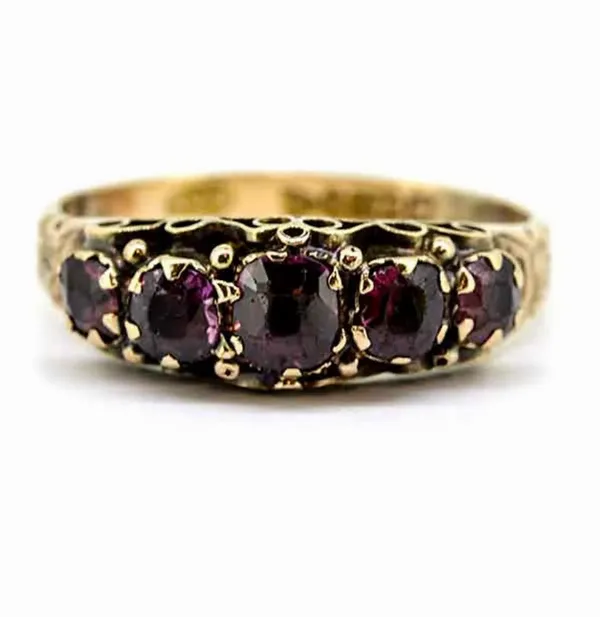 Sold
Early 20th Century 9ct Yellow Gold Garnet Five stone Ring
Art Nouveau (1890–1915) · Sold